

Fire Door Survey vs Fire Compartmentation Survey: What's the Difference?
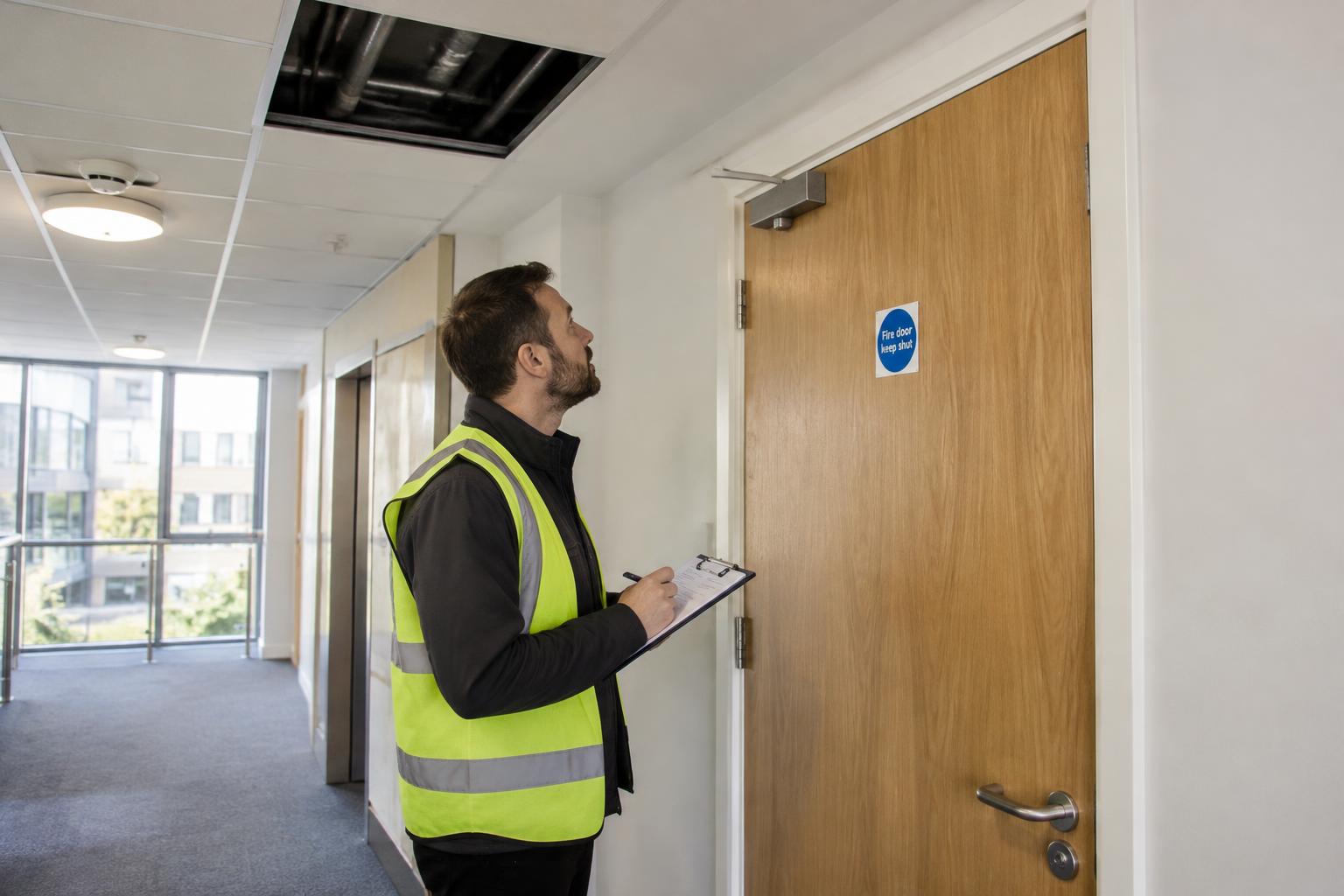
A fire door survey inspects the fire doors in a building: the leaf, frame, seals, hardware and gaps around each door. A fire compartmentation survey assesses the fire resisting walls, floors, ceilings and service penetrations that divide a building into separate compartments. Fire doors are one part of a compartment line, so the two surveys are related, but they cover different elements and produce different reports.
If you are responsible for fire safety in a building, you will almost certainly be asked for both at some point. Fire risk assessors, managing agents and insurers can all ask for evidence of compartmentation surveys or fire door inspections, and it is not unusual for a building owner to commission one when they actually needed the other.
This guide explains what each survey covers, where they overlap, how often each should be carried out and how to decide which one your building needs.
What is a fire door survey?
A fire door survey, also called a fire door inspection, is a detailed check of every fire door assembly within an agreed scope. It looks at the complete door set rather than the door leaf alone, because a fire door only performs as tested when every component is present and correctly fitted.
A competent fire door inspector will typically check:
- Whether the door is a certified fire door and whether a certification label or plug is present.
- The condition of the leaf and frame, including damage, warping and previous repairs.
- Gaps between the leaf and frame, and at the threshold.
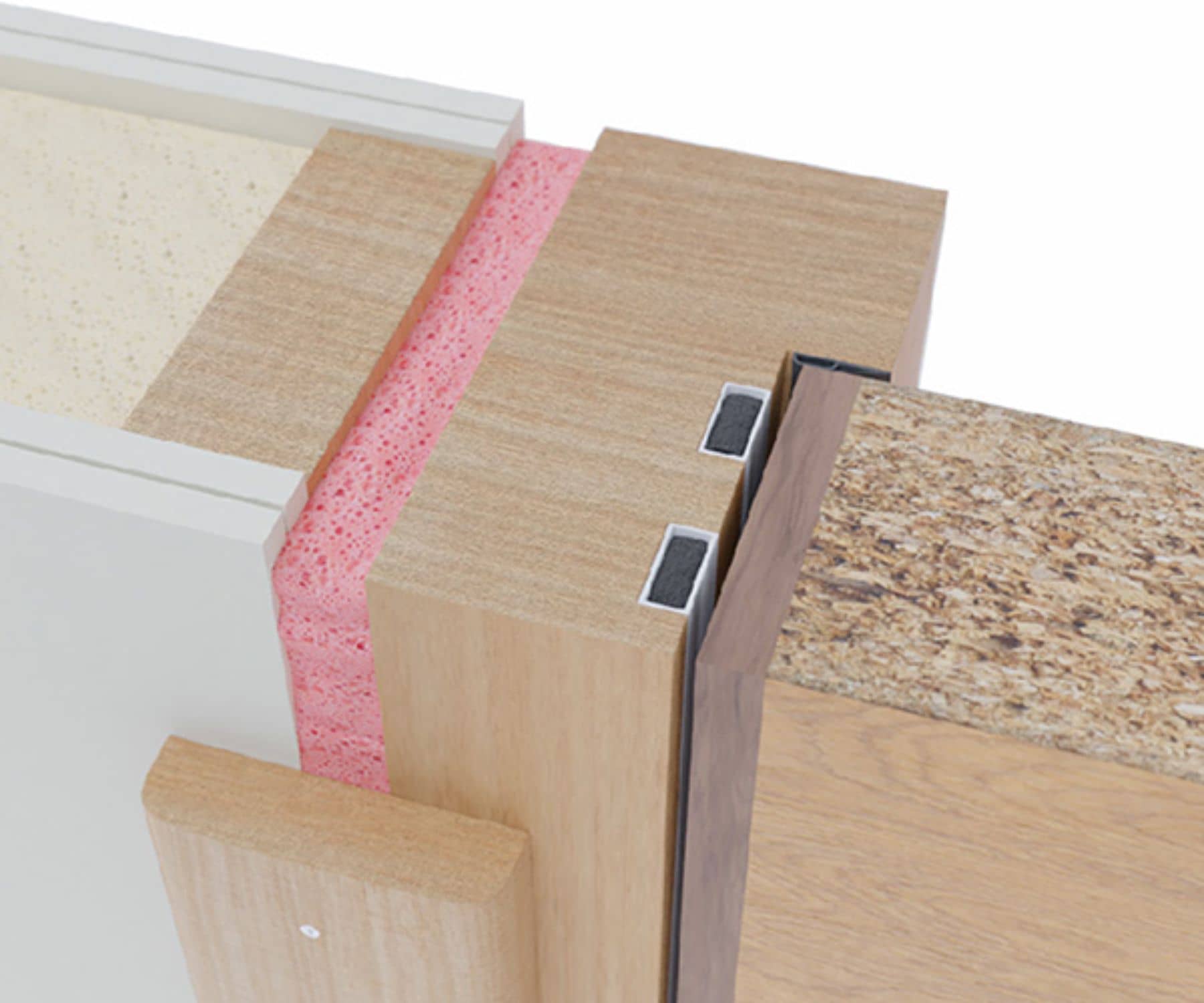
- Intumescent strips and cold smoke seals, and whether they are continuous and undamaged.
- Hinges, closers, latches, locks and other hardware, and whether they are appropriate for a fire door.
- Glazing and glazing beads where the door contains vision panels.
- Whether the door closes fully into its frame from any open position.
- Signage and whether the door is being held open or wedged.
The output is a door by door report listing each door, its condition, any defects found and the recommended remedial action. Vanguard's fire door inspections are carried out by trained inspectors and documented in this way so that the report can support your legal duties as the responsible person.
What is a fire compartmentation survey?
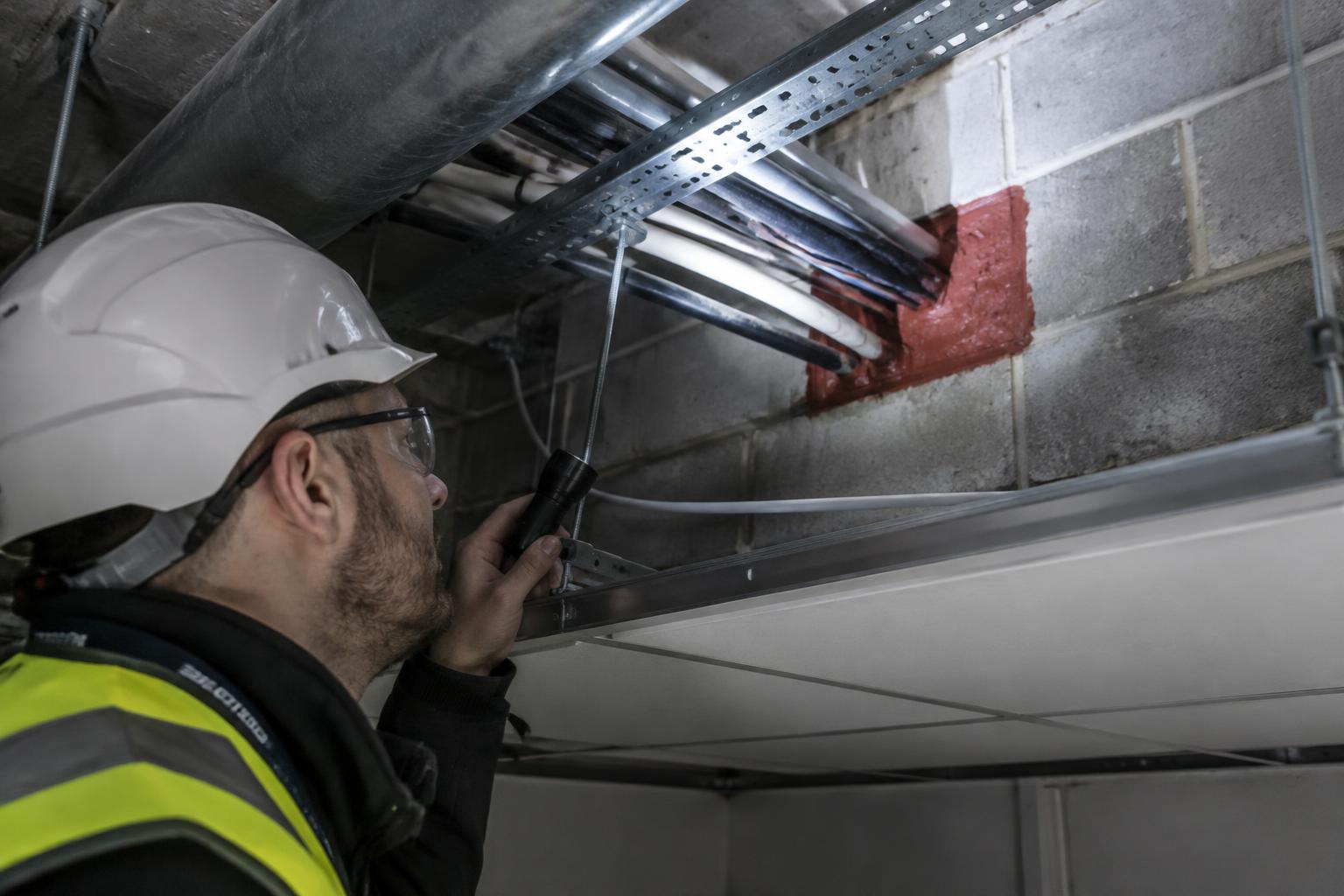
A fire compartmentation survey assesses whether the fire resisting construction of a building is complete and in a condition that will contain fire and smoke in the way the building's fire strategy intends.
| Fire door survey | Fire compartmentation survey | |
|---|---|---|
| What is inspected | Fire door assemblies: leaf, frame, seals, hardware, glazing, gaps and closing action | Fire resisting walls, floors, ceilings, cavity barriers and service penetrations |
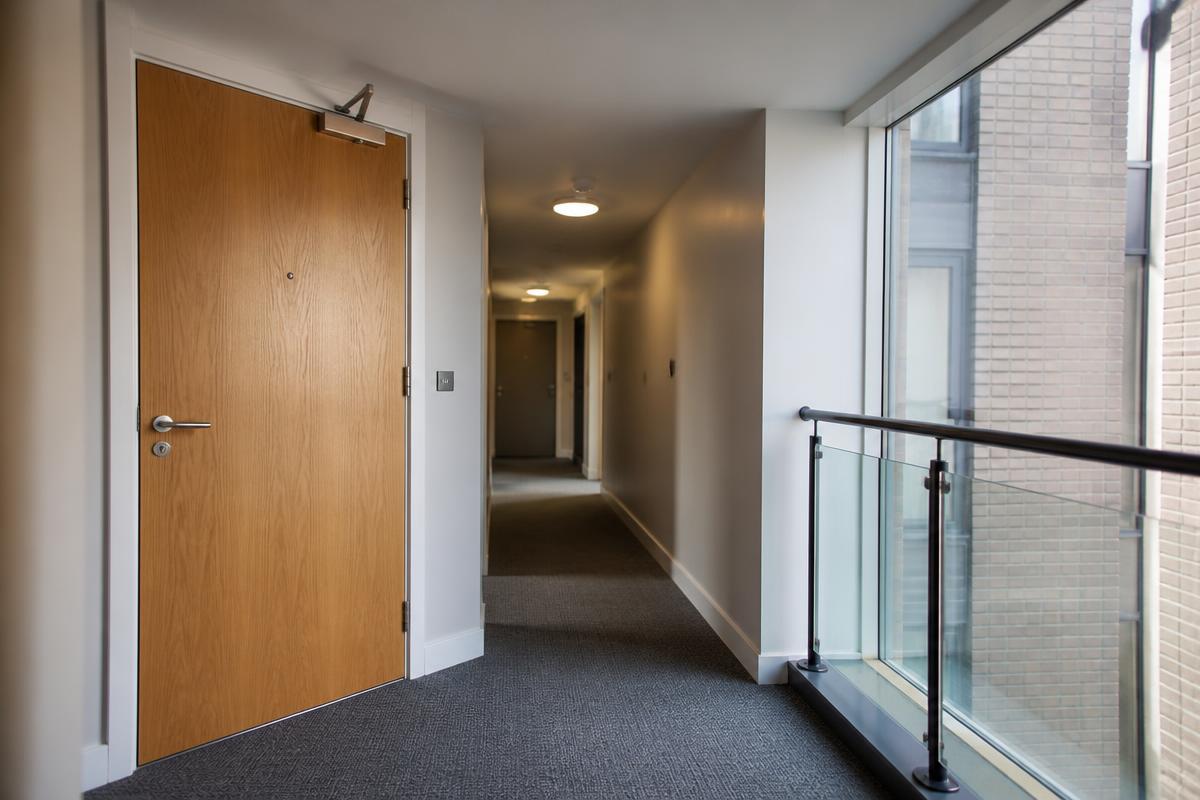
| Typical locations | Corridors, stairwells, flat entrance doors, riser and cupboard doors, plant room doors | Ceiling voids, risers, service cupboards, plant rooms, roof spaces, above suspended ceilings |
| Main defects found | Missing or damaged seals, excessive gaps, faulty closers, incorrect hardware, damaged leaves | Unsealed service penetrations, missing firestopping, gaps in walls above ceilings, incomplete cavity barriers |
| Who carries it out | A trained fire door inspector | A trained passive fire protection surveyor |
| Report format | Door by door schedule with condition and defects | Floor by floor report with photographs, defect locations and priorities |
| Follow on work | Fire door maintenance or fire door installations | Firestopping installations and remedial building work |
A compartmentation surveyor will normally note the presence and general condition of fire doors along a compartment line, because a door that does not close is a breach in that line. However, the door will not usually be inspected to the level of detail that a dedicated fire door survey provides. Equally, a fire door inspector will not typically open ceiling tiles or riser cupboards to check the wall behind the door frame.
Are fire doors part of fire compartmentation?
Yes. A fire door is a fire resisting element that closes an opening in a compartment wall. Without the door, the wall cannot perform its function. This is why the two surveys are so often confused: they are both concerned with the same objective, which is keeping fire and smoke within the compartment of origin.
The distinction matters in practice because the skills, tools and reporting are different. A fire door inspector needs to understand door construction, certification and installation tolerances. A compartmentation surveyor needs to understand building construction, firestopping systems and how services are routed through a building. Many providers, including Vanguard, offer both services, but they are scoped and reported separately.
How often should fire doors be inspected?
There are two sources to consider: legislation and British Standards.
What the law requires
Under the Regulatory Reform (Fire Safety) Order 2005, which applies to non-domestic premises and the common parts of residential buildings in England and Wales, the responsible person must ensure that fire safety facilities, equipment and devices are maintained in an efficient state, in efficient working order and in good repair. Fire doors fall within this duty. The Order does not specify an inspection interval.
The Fire Safety (England) Regulations 2022, which came into force on 23 January 2023, introduced specific intervals for multi occupied residential buildings in England with storeys over 11 metres. In those buildings, the responsible person must carry out checks of fire doors in the common parts at least every three months, and must use best endeavours to check flat entrance doors at least every 12 months.
What the standards recommend
BS 9999, the code of practice for fire safety in the design, management and use of buildings, recommends that fire doors are inspected at least every six months. Doors that are used heavily may need to be checked more often.
For a fuller explanation of these duties, see our guide to fire door regulations and download The Responsible Person's Fire Door Handbook.
How often should a fire compartmentation survey be carried out?
Unlike fire doors, there is no fixed statutory interval for compartmentation surveys. The need for a survey is normally identified through the building's fire risk assessment, which the Fire Safety Order requires to be reviewed regularly and whenever there is reason to suspect it is no longer valid.
In practice, a compartmentation survey is commonly commissioned when:
- A fire risk assessment identifies compartmentation as a concern or notes that its condition is unknown.
- A building has undergone refurbishment, fit out or mechanical and electrical works that involved running services through walls and floors.
- A building is acquired and there is no reliable record of its passive fire protection.
- A building is subject to the higher risk building regime under the Building Safety Act 2022 and evidence of compartmentation is needed.
- There is a change of use or a change in the way the building is occupied.
Our companion article, What Does a Fire Compartmentation Survey Involve?, explains the survey process step by step.
Which survey does your building need?
In most buildings the honest answer is both, but not necessarily at the same time or at the same frequency.
Choose a fire door survey if you need to demonstrate compliance with the inspection intervals set out in the Fire Safety (England) Regulations 2022 or BS 9999, or to meet your duty under the Regulatory Reform (Fire Safety) Order 2005 to maintain a suitable system of inspection and maintenance. It's also the right choice if your fire risk assessment has flagged fire door defects, or if you're planning a remediation programme and need a baseline.
Choose a fire compartmentation survey if your fire risk assessment has raised compartmentation as an issue, if works have been carried out that may have breached walls or floors, if you have no record of the building's firestopping, or if you need evidence of compartmentation for a building safety case.
Choose both if you are taking over responsibility for a building with an unknown fire safety history. A combined assessment gives a complete picture of the building's passive fire protection and allows remedial work to be planned and prioritised in one programme. This is the approach Vanguard takes in the Assess stage of its Assess, Reinstate, Maintain programme, described on our about us page.
What happens after the survey?
Both surveys produce a list of defects, along with any items that could not be fully assessed, for example where access to an area was restricted. What matters next is that those defects are put right by a competent contractor using products and methods that are supported by test evidence, and that any outstanding queries are followed up to close the gaps in the picture.
Fire door defects are addressed through fire door maintenance where the door can be repaired and brought back to standard, or through fire door installations where replacement is the only compliant option. Compartmentation breaches are addressed through a range of remedial works depending on the defect, including firestopping installations, fire curtains, fire barriers, cavity barriers, fire-rated shutters and glazed screens, using tested systems appropriate to the type of penetration and the fire resistance required.
Vanguard Fire Protection is LPCB certified and affiliated to the Institute of Fire Safety Managers. Details of our third party certification can be found on our accreditations page, and examples of completed work are on our case studies page.
To discuss a fire door survey, a fire compartmentation survey or both for a building in Sussex, Hampshire, Kent, London, Brighton or Surrey, contact our team or call 0333 339 7225.
Frequently asked questions
Is a fire door survey the same as a fire door inspection?
Yes. The terms are used interchangeably. Both describe a detailed check of fire door assemblies against the condition and installation standard they need to meet, with a report listing defects and recommended actions.
Does a fire compartmentation survey include fire doors?
A compartmentation surveyor will note fire doors along a compartment line and record obvious defects, because an open or damaged door is a breach. It does not replace a dedicated fire door survey, which inspects each door assembly in far more detail.
Is a fire compartmentation survey a legal requirement?
There is no regulation that requires a compartmentation survey at a fixed interval. However, the Regulatory Reform (Fire Safety) Order 2005 requires the responsible person to carry out and review a fire risk assessment and to maintain fire safety measures. A compartmentation survey is often the only practical way to establish whether the building's fire resisting construction is intact.
How long does each survey take?
It depends on the size and complexity of the building, the number of doors or compartment lines in scope and how accessible ceiling voids and risers are. Vanguard will confirm the expected duration when scoping the survey.
Can Vanguard carry out both surveys at the same time?
Yes. Vanguard offers fire compartmentation surveys and fire door inspections across the South East and can scope both as a single assessment where that is the most efficient approach for the building.
Take control of your building’s fire safety.
Reach out to our team today for a tailored consultation or to request a quote.