

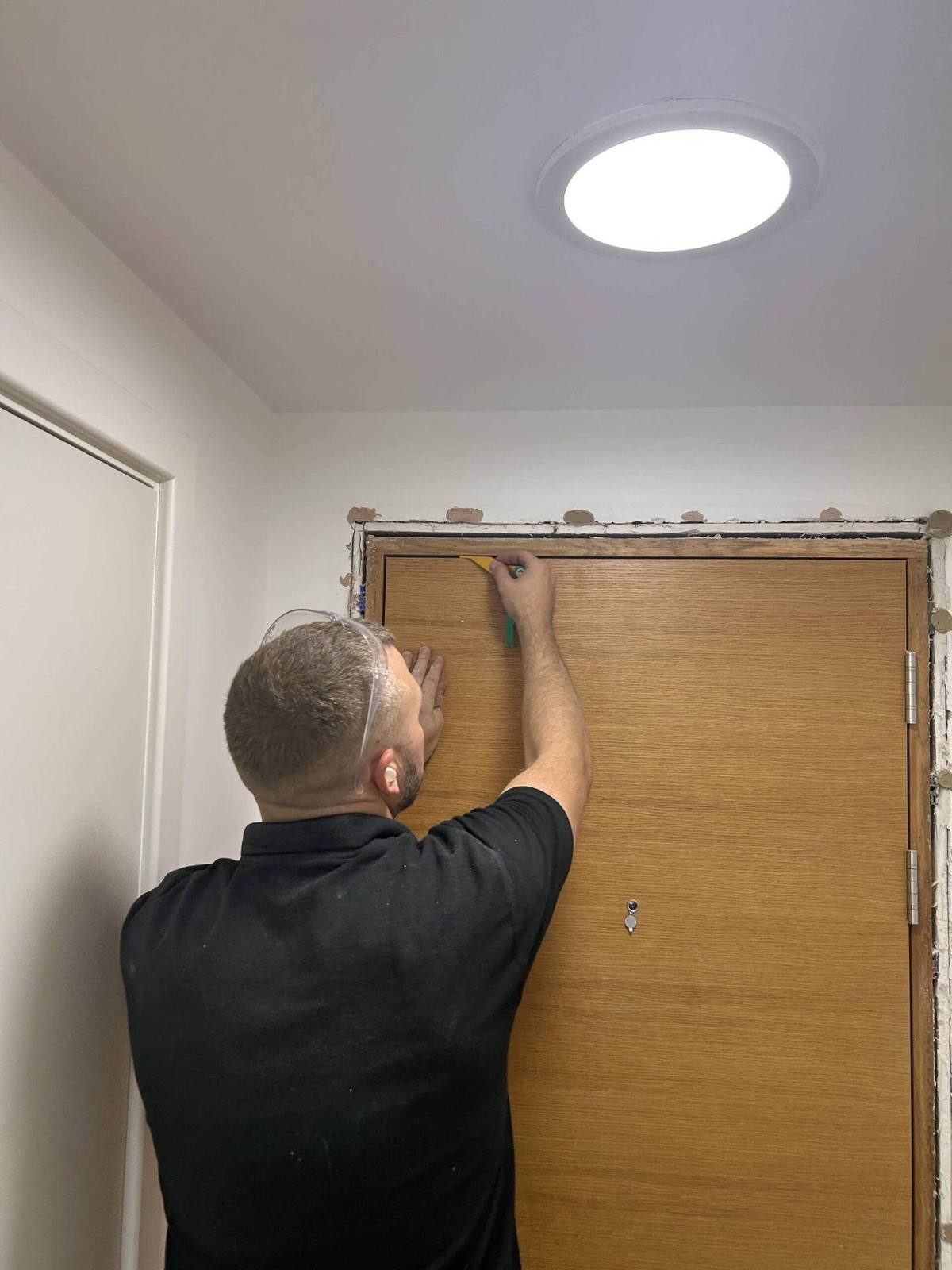
How Often Should Fire Doors Be Inspected? Your Legal Duties Explained
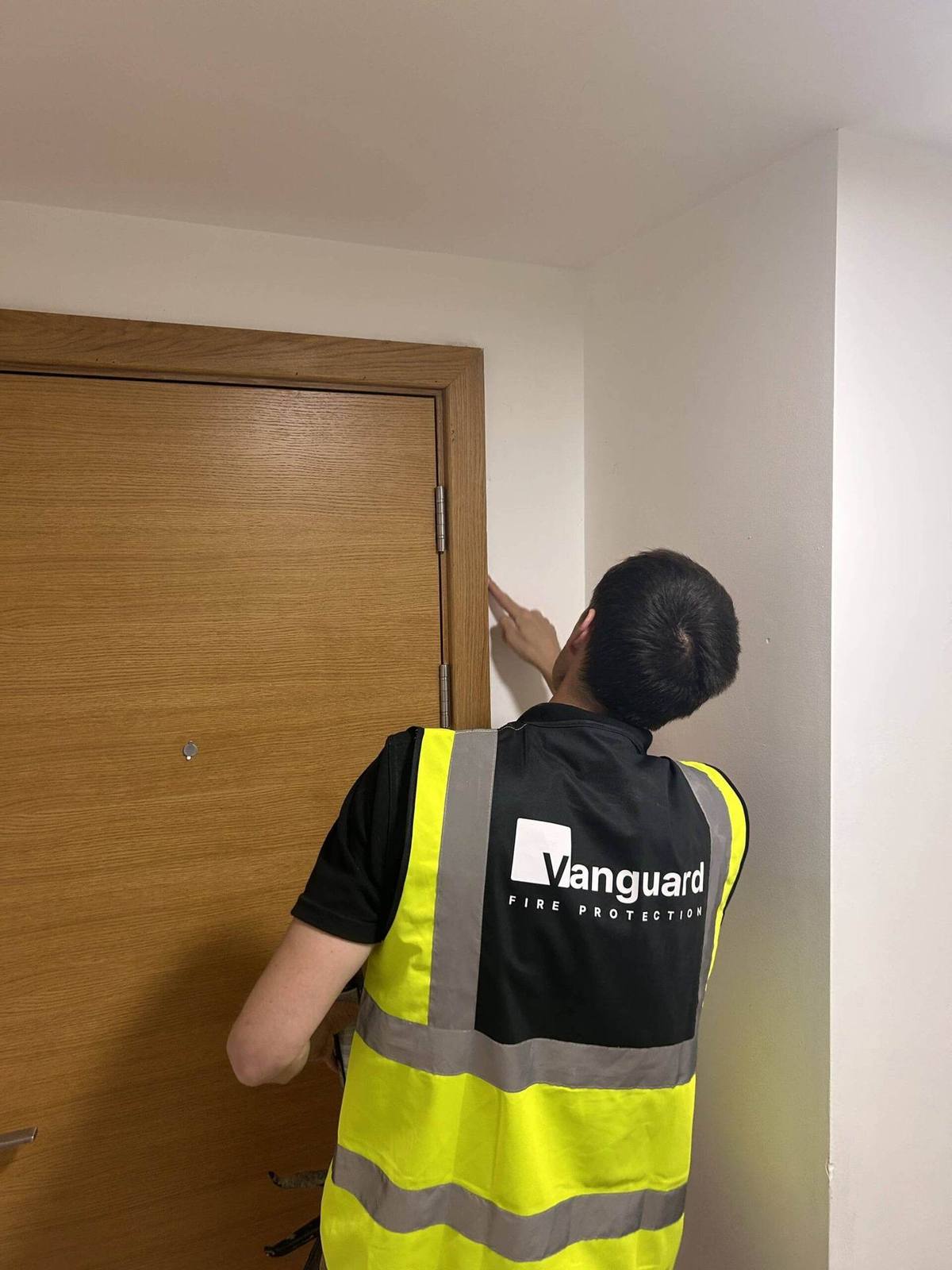
How often fire doors must be inspected depends on the building. In blocks of flats with a top storey more than 11 metres above ground, the Fire Safety (England) Regulations 2022 require communal fire doors to be checked at least every three months and flat entrance doors at least every 12 months. In other buildings, fire doors must be kept maintained, and industry guidance recommends inspection every six months.
Fire doors only protect people if they work on the day of a fire. A door that has been wedged open, has a broken closer or has warped in its frame can let fire and smoke spread through a building in minutes. That is why the law puts the duty to keep them working on the Responsible Person, and why knowing how often to check them matters. This guide sets out what the law requires for each type of building, what an inspection covers, who can carry one out and what to do when a door fails.
What does the law say about fire door inspections?
Three pieces of legislation set the rules for fire doors in England:
- The Regulatory Reform (Fire Safety) Order 2005 (see our fire door regulations explained guide) applies to almost every non domestic building and to the common parts of blocks of flats. Article 17 requires the Responsible Person to keep fire safety measures, including fire doors, "in an efficient state, in efficient working order and in good repair".
- The Fire Safety Act 2021 clarified that the Order covers the structure and external walls of multi occupied residential buildings, and the entrance doors of individual flats.
- The Fire Safety (England) Regulations 2022 came into force on 23 January 2023. Regulation 10 sets fixed minimum intervals for checking fire doors in residential buildings over 11 metres, and requires information about fire doors to be given to residents of all blocks of flats.
Failing to meet these duties is a criminal offence, and the fire and rescue service can issue enforcement notices where fire doors are found to be defective.
How often should fire doors be inspected in blocks of flats over 11 metres?
Regulation 10 applies where the top storey is more than 11 metres above ground level, which is typically a building of more than four storeys. The minimum intervals are:
| Door type | Minimum frequency | What the duty says |
|---|---|---|
| Communal fire doors (stairways, lobbies, corridors, plant rooms, risers, cupboards) | At least every 3 months | The Responsible Person must check them |
| Flat entrance fire doors | At least every 12 months | The Responsible Person must use "best endeavours" to check them, and record the steps taken, including when access is refused |
These are minimums. Doors on busy routes, doors that are frequently damaged, or doors where previous checks found problems may need attention more often, and your fire risk assessment should say so.
How often should fire doors be inspected in buildings under 11 metres?
Blocks of flats under 11 metres are not covered by the three monthly and annual check schedule in Regulation 10. The Responsible Person still has to keep fire doors maintained under the Fire Safety Order, and must still tell residents how to use fire doors properly.
Industry guidance recommends inspecting communal fire doors in these buildings at least every six months, and more often where they are heavily used, with flat entrance doors inspected annually. Following this schedule gives you clear evidence that you are meeting your maintenance duty.
How often should fire doors be inspected in commercial and public buildings?
Offices, schools, hospitals, care homes, shops and other non domestic premises have no fixed legal inspection interval. Instead, the Fire Safety Order requires fire doors to be maintained in good working order, and the frequency should come from your fire risk assessment.
British Standard BS 9999 recommends checking fire doors every six months. Buildings with heavy footfall, such as schools, hospitals and student accommodation, often need more frequent checks because doors take more wear and are more likely to be propped open or damaged.
What is the difference between a fire door check and a fire door inspection?
The terms are often used interchangeably, but they describe two different levels of scrutiny:
Routine checks are the simple, visual checks described in the government's Regulation 10 guidance. Caretakers, managing agents and maintenance staff can carry them out with appropriate instruction. They confirm the door closes, latches and has not been obviously damaged.
Professional fire door inspections are carried out by a competent, ideally third party certificated, inspector. They assess each door against its certification and tested specification, measure gaps and tolerances, check that every component is compatible, and produce a written report with pass or fail grading and remedial actions. If you are unsure which survey you need, read our comparison of a fire door survey vs a fire compartmentation survey.
Most Responsible Persons use both: routine checks between visits, and a professional fire door inspection to establish a baseline and confirm compliance at least once a year.
What is checked during a fire door inspection?
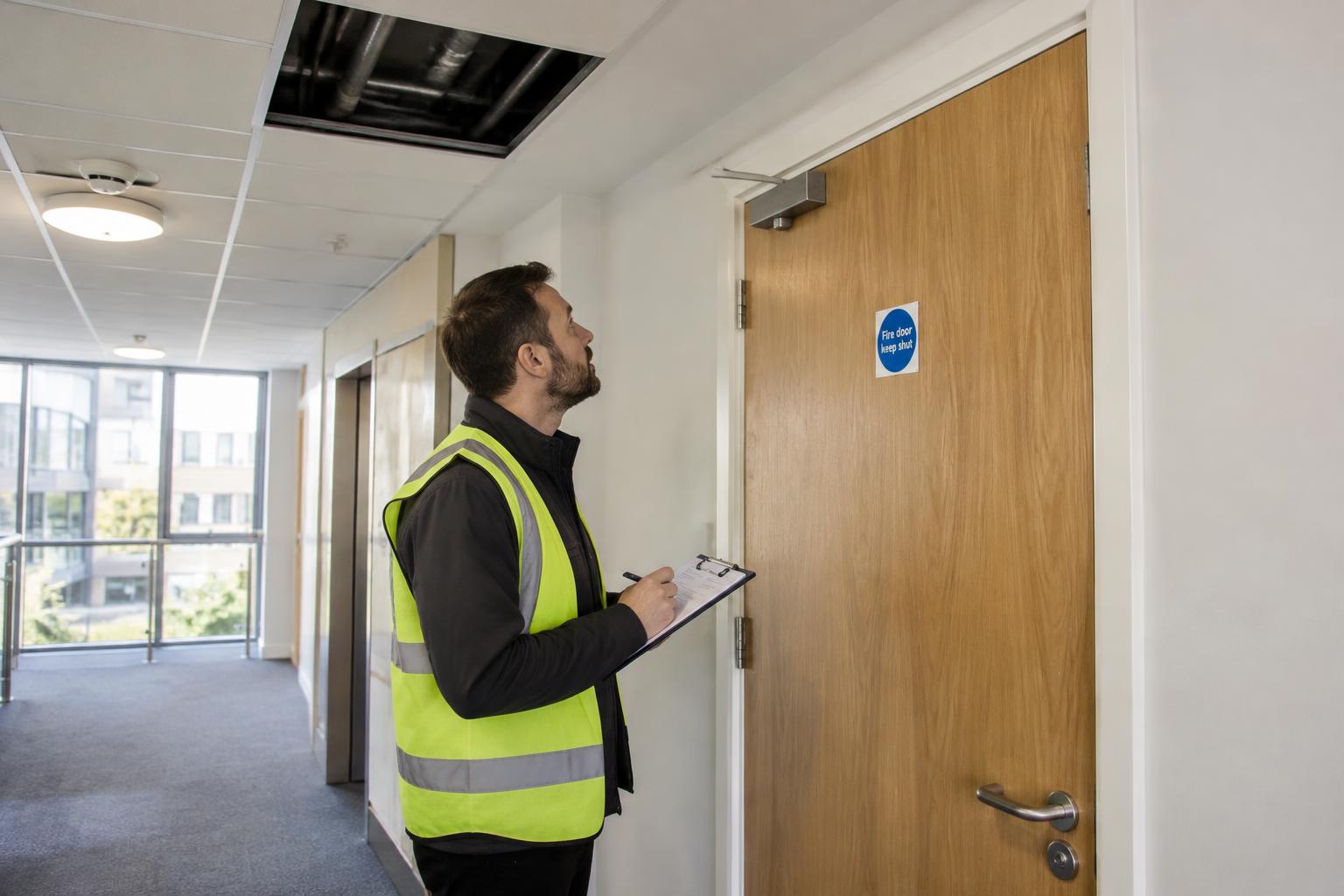
A thorough inspection looks at the whole door, not just the leaf. A typical fire door inspection checklist covers:
- Certification: a label, plug or documentation confirming the door's fire rating, and that it has not been replaced with a non fire resisting door.
- Gaps: the gap between the leaf and frame should generally be no more than 4mm at the sides and head; the threshold gap is assessed separately against the door's specification.
- Intumescent and smoke seals: present, undamaged, in contact with the door or frame and not painted over.
- Self closing device: the door should close fully and latch from fully open and from about 15 degrees.
- Hinges and ironmongery: fire rated, correctly fixed, with no loose or missing screws.
- Door leaf and frame: no splits, warping, holes from removed locks or damage to glazing.
- Glazing and vision panels: fire rated glass with intact glazing beads and seals.
- Letterboxes and air transfer grilles: fire rated and closing properly.
- The surrounding wall: any gap between the frame and the wall properly sealed, so fire cannot bypass the door.
Who can inspect fire doors?
Routine Regulation 10 checks do not need a specialist. The government's guidance describes them as simple and basic, and says suitably instructed staff can carry them out.
A full inspection is different. The Responsible Person must appoint someone competent, and the clearest way to demonstrate competence is third party certification. Vanguard is certificated by LPCB under LPS 1197, a scheme operated by BRE that covers the inspection, maintenance and repair of fire doors, and is an affiliate member of the Institute of Fire Safety Managers. You can see our accreditations in full.
What records should you keep?
Keep a dated record of every check and inspection, the doors covered, what was found and what was done about it. In buildings over 11 metres, Regulation 10 specifically requires a record of the steps taken to check flat entrance doors in each 12 month period, including any occasions when a resident refused access.
Good records protect you if the fire and rescue service audits the building, and they form part of the safety information that should be kept for higher risk buildings under the Building Safety Act 2022.
What happens if a fire door fails inspection?
Any repair or replacement should be carried out by a competent contractor as soon as reasonably practicable. Common failures such as excessive gaps, damaged seals or faulty closers can usually be put right with targeted fire door maintenance using components that match the door's tested specification.
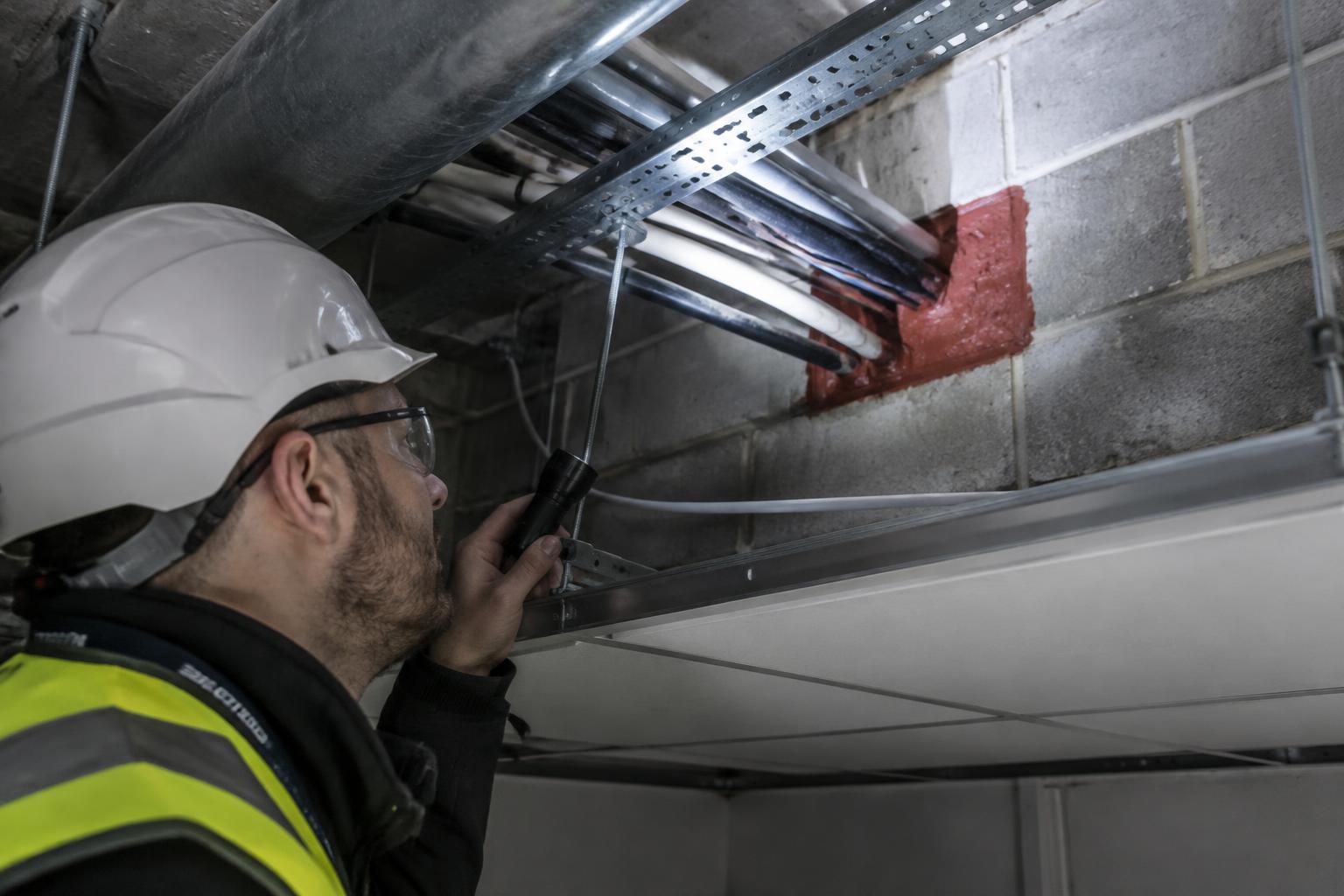
Where a door is beyond repair, it should be replaced, ideally with a certificated fire doorset installed to the manufacturer's instructions. Our guide to what a fire doorset is and why it matters explains the difference. If inspections point to wider problems with fire separation, such as unsealed service penetrations around the door, a fire compartmentation survey will show the full picture; here is what a fire compartmentation survey involves.
Book a fire door inspection
Vanguard carries out LPCB certificated fire door inspections across Sussex, Surrey, Kent, Hampshire, Brighton and London. Every door receives a digital report with photographs, pass or fail grading and clear next steps, so you know exactly where you stand. See how this works in practice in our Central Park, Brighton case study, or learn about our ARM process for ongoing compliance. Get in touch to book an inspection, or download our free Responsible Person's Fire Door Handbook.
Frequently asked questions
Is it a legal requirement to inspect fire doors?
Yes. The Fire Safety Order 2005 requires fire doors in non domestic buildings and the common parts of flats to be maintained in good working order, which in practice means inspecting them. In blocks of flats over 11 metres, the Fire Safety (England) Regulations 2022 also set minimum check intervals of three months for communal doors and 12 months for flat entrance doors.
Can I check fire doors myself?
You or your staff can carry out routine visual checks, provided you have been shown what to look for. A full fire door inspection, which assesses each door against its certification and produces a formal report, should be carried out by a competent inspector, ideally one with third party certification.
What is the maximum gap around a fire door?
The gap between the door leaf and the frame should generally be no more than 4mm at the sides and head. The threshold gap depends on the door's certification and whether it is required to resist smoke, so it should be checked against the manufacturer's specification.
What happens if a resident refuses access to check their flat door?
Regulation 10 asks the Responsible Person to use best endeavours, so you should record each attempt and the refusal, and try again. Keeping that record is part of the legal duty for buildings over 11 metres.
How often should fire doors be inspected in a school or office?
There is no fixed legal interval for non domestic buildings. BS 9999 recommends every six months, and busy buildings such as schools often need more frequent checks. Your fire risk assessment should set the frequency.
Take control of your building’s fire safety.
Reach out to our team today for a tailored consultation or to request a quote.