

What Is a Fire Doorset and Why Does It Matter?
A fire doorset is a complete fire door unit: the door leaf, frame, hinges, closer, seals and any glazing, supplied from a single source and tested together to resist fire for a set time, such as 30 minutes (FD30). Because every part has been tested as one system, a correctly installed doorset gives the clearest evidence that the door will perform as certified.
A fire door is one of the most important parts of passive fire protection, and it is only as good as its weakest component. Fit the wrong hinges, the wrong seals or a frame that was never tested with that leaf, and a door sold as FD30 may fail long before 30 minutes. That is why the term "fire doorset" matters to anyone specifying, installing or managing fire doors, and why it is increasingly expected in higher risk buildings.
What is the difference between a fire door, a fire door assembly and a fire doorset?
People often say "fire door" when they mean the whole opening. In practice there are three different things:
| Term | What it is | Who is responsible for performance |
|---|---|---|
| Fire door leaf | The door panel on its own. A fire rated leaf is not a working fire door until it is hung in a compatible frame with tested components. | Shared between the leaf manufacturer, whoever chooses the other components and the installer |
| Fire door assembly | A complete installed fire door whose leaf, frame and hardware come from separate sources and are put together on site. | Whoever assembles it, who must show every component is covered by the test evidence |
| Fire doorset | A complete unit of frame, leaf or leaves and all essential parts, supplied from a single source, usually factory assembled. | One manufacturer, for the unit as tested, provided it is installed to their instructions |
Both assemblies and doorsets can be compliant. The difference is how much has to go right on site, and how easy it is to prove afterwards.
What parts make up a fire doorset?
A fire doorset typically includes:
- the door leaf or leaves;
- the frame or lining;
- intumescent seals, which expand in heat to close the gap around the door, and smoke seals, which stop cold smoke;
- fire rated hinges, latch or lock and a self closing device;
- fire rated glazing, glazing beads and seals, where there is a vision panel;
- any letter plate or air transfer grille;
- signage and the fixings used to secure the frame into the wall.
Change any one of these for an untested alternative and the certification for the whole doorset may no longer apply.
What do FD30, FD60 and FD30S mean?
Fire doorsets are tested in a furnace to British Standard BS 476-22 or the European standard BS EN 1634-1. The rating tells you how long the door kept fire from passing through it in that test:
- FD30 and FD60 mean the doorset achieved 30 or 60 minutes of fire integrity under the British test.
- An S suffix, as in FD30S, means the doorset has also been tested for smoke leakage, usually with smoke seals fitted.
- Under the European test, ratings are written E30 for integrity or EI30 for integrity and insulation, with Sa indicating smoke control.
As covered in our guide to fire door regulations, Approved Document B generally expects doors on escape routes and flat entrance doors to provide at least 30 minutes of fire resistance, often with smoke control, which is why FD30S is one of the most commonly specified ratings in residential buildings.
Why does a fire doorset matter?
- It is tested as it will be used. A fire door's rating only holds for the combination of components that went into the furnace. With a doorset, that combination arrives as one unit.
- There is one point of responsibility. If a doorset underperforms, there is one manufacturer accountable for the unit, rather than several suppliers pointing at each other.
- There are fewer variables on site. Machining, hanging and fitting hardware in a factory removes many of the mistakes that cause fire doors to fail inspection, such as uneven gaps or incompatible hinges.
- It is easier to evidence. Responsible Persons need to show their fire doors are fit for purpose. A certificated doorset with its label, certificate and installation record is straightforward to verify at every future inspection.
How do you know a fire doorset is certified?
Look for third party certification. Independent schemes such as Certifire, BM TRADA Q-Mark and IFC Certification audit the manufacturer's factory and test evidence, and require ongoing checks. A certificated doorset should come with:
- a certification label or plug, usually on the top edge of the door leaf, that identifies the scheme and the product;
- a certificate or data sheet stating the fire rating and the components covered;
- the manufacturer's installation instructions, which form part of the certification.
If you cannot find a label or documentation, that does not automatically mean a door is unsafe, but it does mean its performance cannot be confirmed. A fire door inspection will establish what you have.
Does a fire doorset need a certified installer?
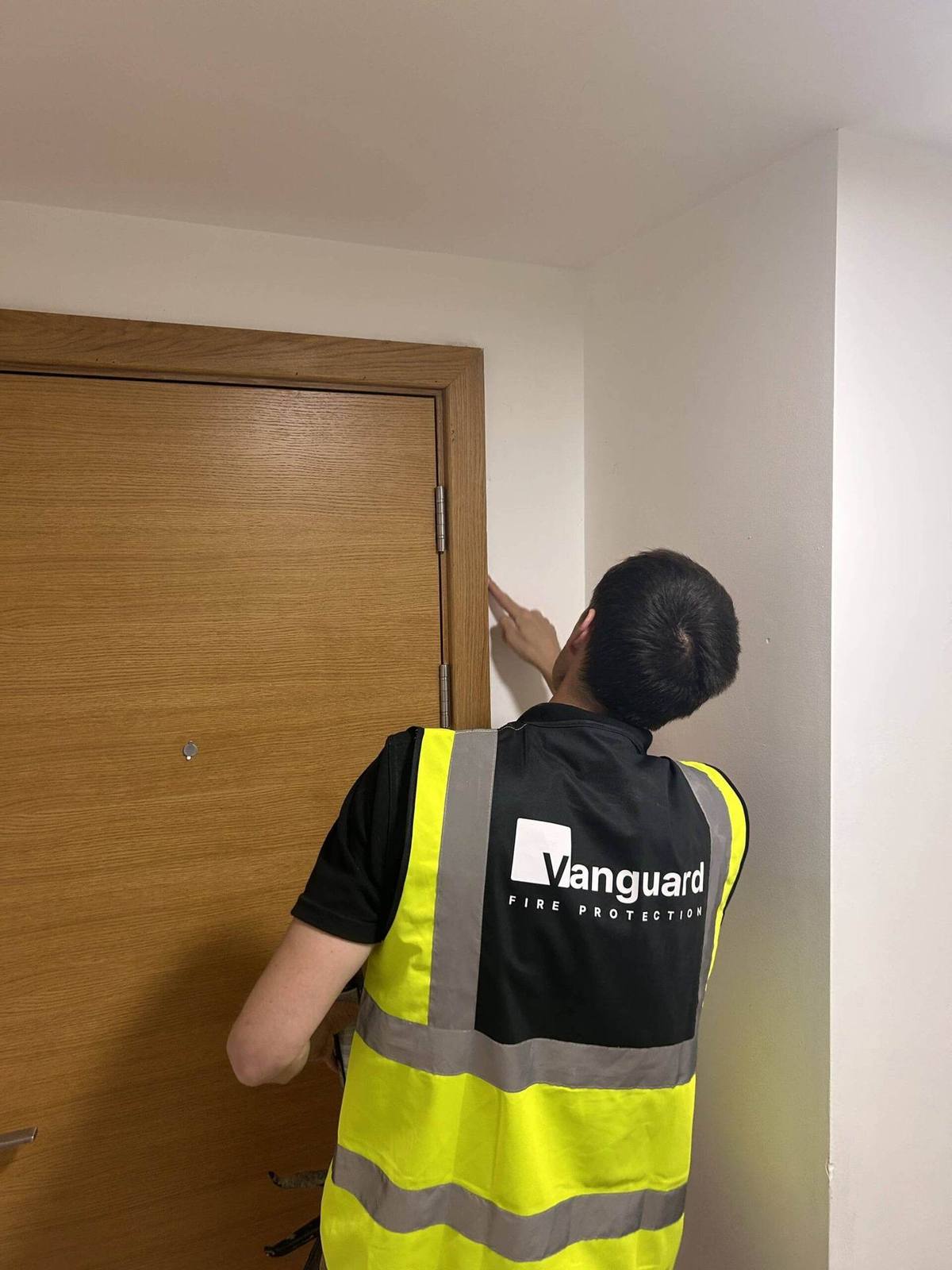
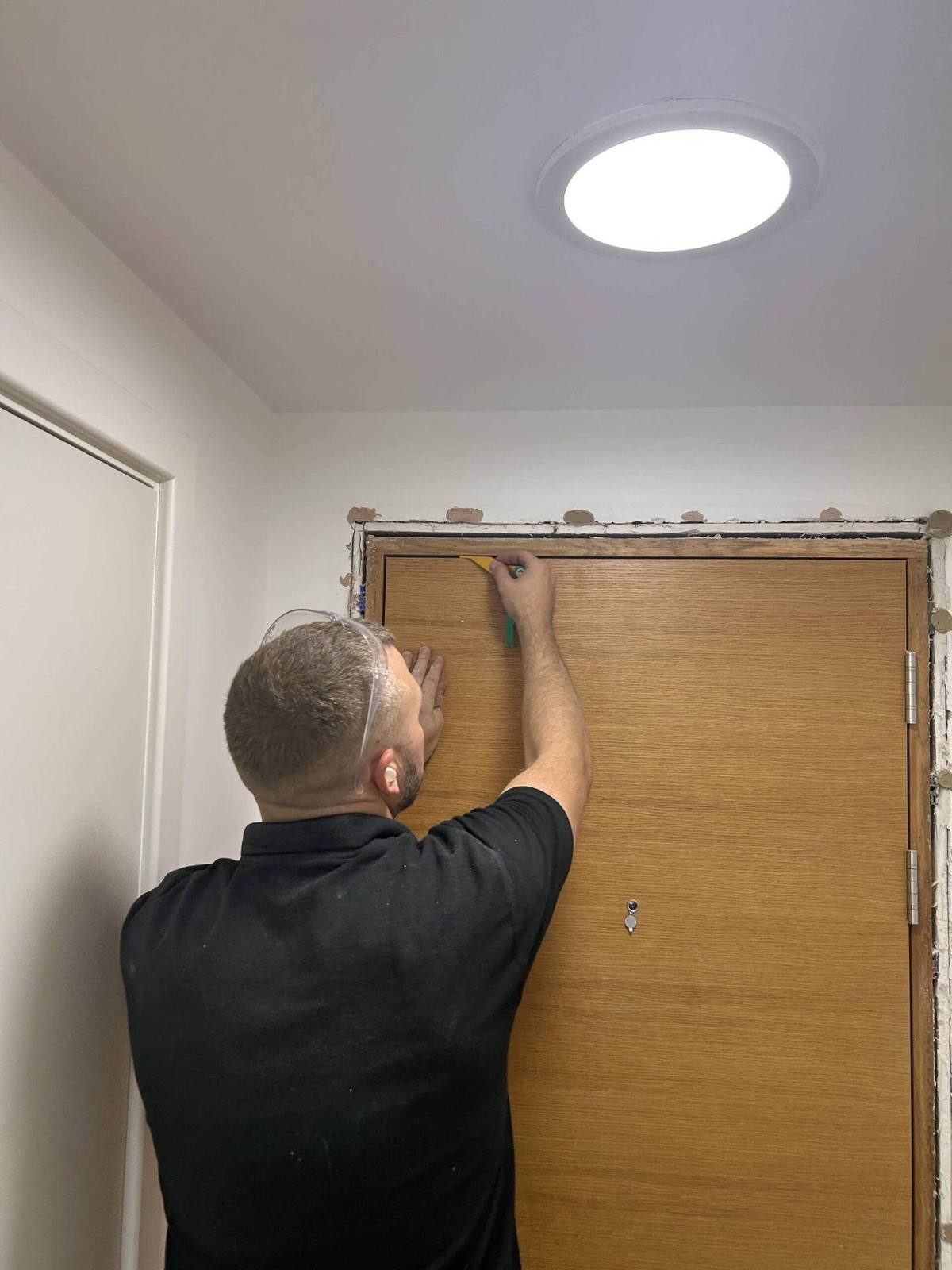
A doorset only performs as certified if it is installed exactly as the manufacturer and the certification require. Common installation mistakes include frames packed or fixed incorrectly, gaps outside tolerance, hardware swapped on site and the gap between the frame and the wall left unsealed or filled with standard foam.
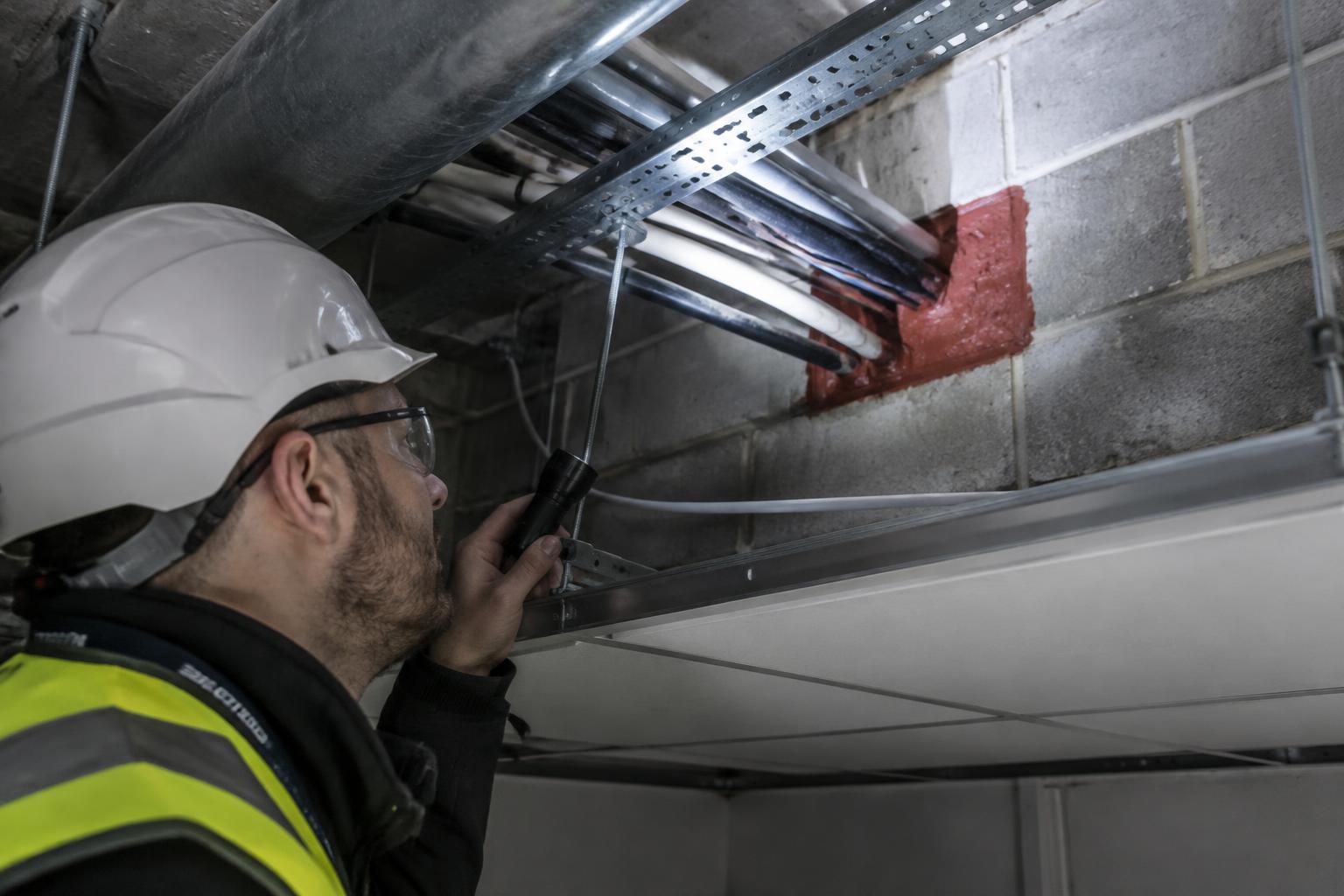
BS 8214:2016 is the code of practice for installing timber fire door assemblies, and Approved Document B and the Fire Safety Order 2005 both apply to the finished door. Read about our accreditations to see how we evidence competence. Using a competent, certified installer gives you confidence that the door in the wall matches the door that was tested. Vanguard's fire door installation service installs FD30 and FD60 doorsets to manufacturer test parameters and BS 8214, seals the frame to the surrounding structure with tested firestopping products, and hands over a photographic record and doorset data for every door.
Should you choose a fire doorset or a fire door assembly?
For new installations and replacements, particularly in blocks of flats, healthcare and education buildings, a third party certified doorset is usually the most reliable route to compliance. A fire door assembly can still be compliant where every component is certified, compatible and covered by the same test evidence, but it places far more responsibility on the specifier and installer to prove it.
Whichever route you take, ask for the test evidence and certification before work starts, and make sure it is kept with the building's fire safety records. Our free Responsible Person's Fire Door Handbook explains what to keep.
Keeping a fire doorset compliant after installation
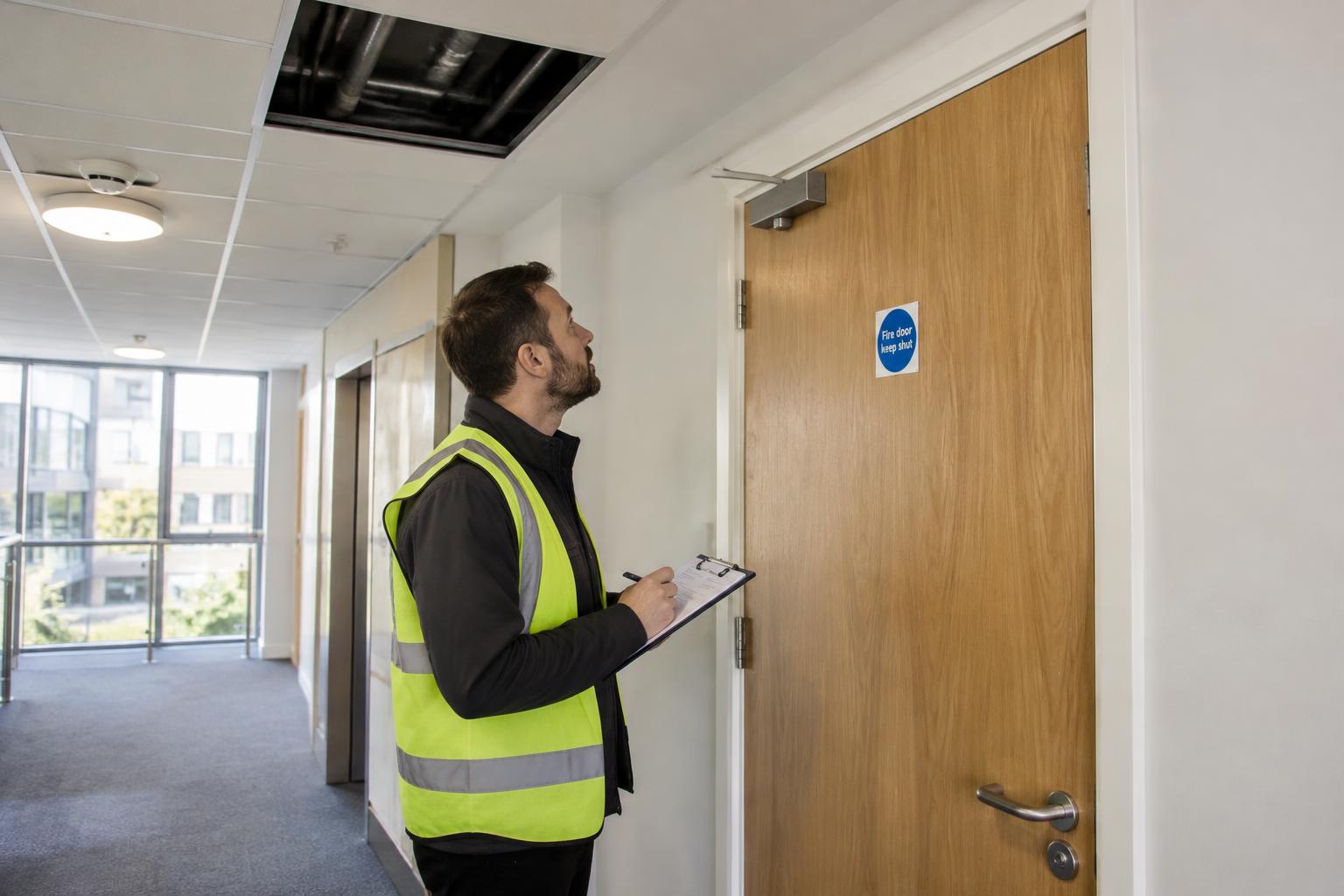
A doorset's certification is only maintained if the door is looked after. Once installed it falls under the same inspection duties as any other fire door, set out in our guide to how often fire doors should be inspected. Repairs should use parts that match the doorset's tested specification, which is where specialist fire door maintenance protects the original certification. You can see a full replacement programme in our 26 Alexandra Road, Epsom case study.
Planning new or replacement fire doors? Talk to Vanguard about certificated fire doorset installation across Sussex, Surrey, Kent, Hampshire, Brighton and London.
Frequently asked questions
Is a fire doorset better than a fire door?
A fire doorset is a complete fire door supplied and tested as one unit, so it removes much of the risk of mismatched components. A fire door assembly built from separate certificated parts can also comply, but it is harder to evidence and more dependent on the installer.
Can I change the hinges or closer on a fire doorset?
Only with components the manufacturer confirms are covered by the doorset's test evidence. Fitting untested hardware can invalidate the certification, even if the new part is itself fire rated.
Can a fire doorset be trimmed to fit?
Only within the limits set out in the manufacturer's instructions and certification. Trimming beyond those limits, or adjusting a door after installation, can affect its fire performance.
What does FD30S mean on a fire door?
FD30S means the door achieved 30 minutes of fire integrity in testing to BS 476-22, and has also been tested to restrict the passage of smoke.
Do flat entrance doors need to be fire doors?
Yes. Flat entrance doors in blocks of flats are fire doors, and the Fire Safety Act 2021 confirmed they fall under the Fire Safety Order. Approved Document B generally expects new flat entrance doors to provide 30 minutes of fire resistance with smoke control.
Take control of your building’s fire safety.
Reach out to our team today for a tailored consultation or to request a quote.